Great officiating development should not disappear after the final whistle.
WhistleIQ captures feedback, reflections and context in a way that helps officials revisit, absorb and act on learning when they are ready. Managers and coaches give better feedback faster, and a development history builds over time.
Goals, feedback, reflection, history.
Pre-match goals
Officials set focus areas before a match — converting routine experience into purposeful learning.
Structured feedback
Umpire managers and coaches capture useful, written feedback in consistent formats — no more verbal-only notes that fade.
Post-match reflection
Officials reflect after the match, when ready. Reflection supports ownership of learning and longer retention.
Development history
A long-term record that travels with the official across seasons, panels, tournaments and pathways.
Why “feedback after the match, not on the sideline” matters.
Feedback delivered under pressure, verbally, often doesn’t land. WhistleIQ supports the conversation that comes after — when the official has time, calm and context to absorb it. Written, structured, and there to revisit when needed.
For organisations, this means consistency. The same focus areas, the same rating dimensions, the same record format — across panels, tournaments and seasons.
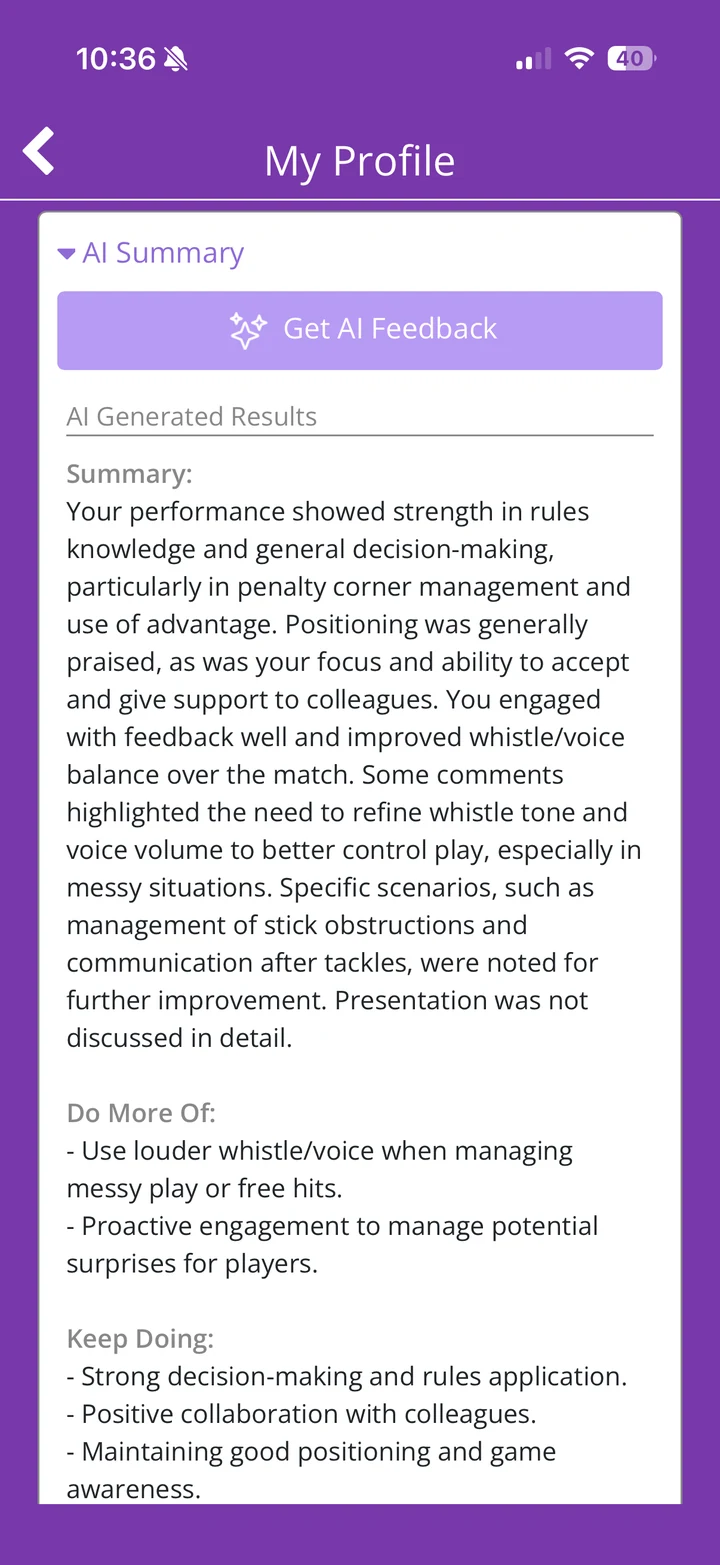
Consistency, evidence and longitudinal learning.
Consistency across panels
Same structures, same formats — reducing variation in how feedback is given and received.
Evidence over time
Decisions about progression, panel selection and development pathways grounded in a real record.
Longitudinal learning
Themes emerge across seasons. WhistleEcho can summarise patterns to support pathway-wide decisions.